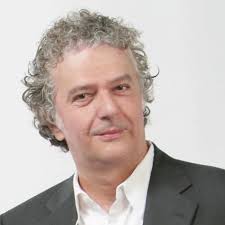
Yiannis Aloimonos
University of Maryland

Listed below are the confirmed invited speakers for Insect Autonomy Workshop at IROS 2026. More speakers will be updated soon.







Talk abstracts and speaker biographies are added as they are confirmed.
Speaker
University of Maryland
Keynote
Robots are built to act in the real world; at the insect scale, power, memory, sensing, and computation become severe constraints. We propose a different foundation for autonomy: a purposive perception–memory–action loop. Our central thesis is that navigation is not primarily a mapping problem; it is a memory problem, shaped by what perception chooses to extract for action. Insects provide a biological proof of principle. Bees, ants, and flies navigate complex environments with remarkably small nervous systems by extracting behaviorally relevant sensory information and maintaining compact navigational variables. What we take from insects is a computational principle, not a blueprint: perceive only what updates the task state, and remember only what must persist for future action. For robotics, this means memory should match the structure of the variable it represents: a ring for heading, and richer structures only when the behavior demands them. Through experiments in purposive perception and structured spatial memory, we show how such frugal representations keep a robot acting under degraded and intermittent sensing, showing how frugality and structure can become sources of robustness. The guiding question is not “how do I reconstruct the world?” but “what is the least a robot must perceive and remember in order to act?”
A Socratic Dialog – Yiannis Aloimonos and Naitri Rajyaguru, Computer Vision Lab, Univ. of Maryland
Yiannis Aloimonos is Professor of Computational Vision and Intelligence at the Department of Computer Science, University of Maryland, College Park, and the Director of the Computer Vision Laboratory at the Institute for Advanced Computer Studies (UMIACS). He is also affiliated with the Institute for Systems Research and the Neural and Cognitive Science Program. He was born in Sparta, Greece and studied Mathematics in Athens and Computer Science at the University of Rochester, NY (PhD 1990). He is interested in Active Perception and the modeling of vision as an active, dynamic process for real time robotic systems. For the past five years he has been working on bridging signals and symbols, specifically on the relationship of vision to reasoning, action and language. He received the Presidential Young Investigator Award from President Bush and the Bodossaki Prize in Artificial Intelligence. He is an IEEE Fellow.
Speaker
Sandia National Laboratories
Keynote
Animals excel at a range of essential behaviors, for example hunting or foraging, that require fast calculations under tight energy constraints. Identifying key computational primitives of biological nervous systems is critical for developing artificial systems that can similarly perform even with limited energy budgets. Insects perform surprisingly complex tasks given the relatively small size of their brains. I will present work focused on developing energy-efficient neuromorphic computing primitives derived from single-neuron computational primitives of insect nervous systems. For example, we have recently developed an analog neuromorphic emulation of shunting inhibition, a biophysical mechanism that approximates real-time multiplication in the Drosophila T4 dendrite, and leveraged this circuit primitive in a range of biologically-inspired applications, including coordinate transformations and dynamic gain normalization. I will discuss ongoing work to leverage these neuromorphic primitives for energy-efficient artificial intelligence models, and how these models may impact on-board compute and edge-AI hardware.
Frances Chance received her MS and PhD from Brandeis University, and her BS from the California Institute of Technology. She is currently a Distinguished Member of the Technical Staff in the Center for Computing Research at Sandia National Laboratories. Her research applies knowledge of biological nervous systems and neural circuit operations to develop and constrain novel neural-informed algorithms and brain-based technologies.
Speaker
Carnegie Mellon University
Keynote
Insects use neural mechanosensing to process information efficiently for agile, robust flight. We explore two types of mechanosensors for disturbance detection in flight: strain and flow. Inspired by neurons embedded in insect wings that efficiently encode complex strain patterns through nonlinear filtering, we designed and fabricated strain-sensitive "switches" directly on flexible wings. These switches open and close at a designated strain threshold, and the timing of their closures allows us to detect and classify disturbances and body rotations (sinusoidal yaw, 4 rad/s amplitude). We also explore sensor placement on the wing computationally and experimentally. Motivated by the many hairs on insect wings and bodies, we extended the same switch-based approach to flow sensing: sub-millimeter sensors respond to airflow reversal (useful for stall detection) and velocities as low as 0.5 m/s.
Sarah Bergbreiter is the Dan and Karen Swanson Endowed Professor of Mechanical Engineering at Carnegie Mellon University, where she also serves as Associate Head for Strategic Initiatives. Her research integrates robotics, MEMS, materials, and manufacturing to create new sensing, actuation, and locomotion technologies for small-scale robotic systems. Prof. Bergbreiter's honors include the DARPA Young Faculty Award, NSF CAREER Award, and Presidential Early Career Award for Scientists and Engineers (PECASE). She and her fabulous current and former students have also received several Best Paper awards at ICRA, IROS, and the Hilton Head Workshop. She is a Fellow of ASME and previously served as Vice Chair of DARPA's Microsystems Exploratory Council. Outside of academia, she enjoys spending time with her husband and two daughters, running or biking outside rather slowly, and the rare game of water polo.
Speaker
University of Washington
Keynote
The theory of embodied intelligence holds that the way brains think is inexorably tied to the body. Some portion of that intelligence comes from the mechanics of the body itself. Size reductions made possible by advances in microfabrication—from sensors to actuators to mechanisms—will allow future autonomous systems to reduce in size to that of an insect. But like in biology, insect-sized robots will never be able to match their larger counterparts in intelligence: there is no room for big computers or batteries. My research team creates robots less than a gram that address this challenge by imbuing their bodies with smart physical design to complement simple computation. Like insects, despite their small size, they can sense and respond to their environment. Flying and hopping robots at this scale could act as mobile sensors, helping detect gas leaks, spot early forest fires, monitor crops, or track the spread of airborne diseases.
Speaker
Centeye, Inc.
Industry Talk
The costliest element in the SWaP budget of a small robotic vision system is generally not the image sensor but the processing behind it. In earlier work we implemented several vision-based flight control tasks using just tens to hundreds of pixels. Reflections on what worked, and on the differences between contemporary computer vision and biological vision, led us to a metric we call pixels per frame: the visual motion, measured in pixels or photoreceptors, accruing in one frame or update. Conventional computer vision operates above one pixel per frame, which carries steep downstream processing costs. Our implementations operate below this threshold, as do event cameras, and we argue biological systems do as well. Below that line, new kinds of image sensor arrays and new classes of algorithms become available, and the processing burden drops sharply. This talk covers the metric, example image sensors, and use cases.
Geoffrey Barrows is the founder of Centeye, Inc., where he develops neuromorphic vision chips and low-SWaP sensing systems for difficult applications. He holds a PhD from the University of Maryland, College Park, and previously worked at the Naval Research Laboratory. His interest in insect-inspired vision dates to 1999, when he built and flew a neuromorphic optical flow sensor on a small air platform.
Speaker
SynSense
Industry Talk
Chenxi Wu is Director of Industrial Applications at SynSense. Their work focuses on low-power mixed-signal neuromorphic computing, including hardware-aware training and deployment of spiking neural networks on the DYNAP-SE2 processor.
Speaker
Dalle Molle Institute for Artificial Intelligence
Rising Star Talk
Insect-scale robots must rely on ultra-low power resource-constrained MCUs for perception-to-action onboard intelligence. At the nano-UAV scale, i.e., 10 cm, tens of grams, and sub-100mW perception, much research concentrated on TinyML models, controllers, and bio-inspired algorithms, while treating the underlying software infrastructure as an implementation detail. This choice is costly: across state-of-the-art nano-UAV systems, closed-loop throughput falls 16–92% short of inference workloads in isolation. Our in- field experiments show the lost throughput directly degrades closed-loop performance, e.g., up to 30% higher position error and mission success dropping from 100% to 40%. This talk builds on NanoCockpit, our open-source performance-optimized application framework for the 27-gram Crazyflie that recovers the ideal throughput, now being integrated into the platform's official software. From this experience, the talk distills broader lessons for insect-scale autonomy, such as zero-copy, memory-efficient software abstractions, latency-efficient sensing-to-control pipelines, and the software stack as a pillar of the overall system design.
Elia Cereda is a postdoctoral researcher at the Dalle Molle Institute for Artificial Intelligence (IDSIA, USI-SUPSI) in Lugano, Switzerland, where he received his Ph.D. in 2026. He researches robust AI for autonomous pocket-sized robotic platforms, spanning performance-optimized software infrastructure, TinyML generalization under domain shift, and self-supervised on-device learning to bridge the gap between lab and real world. He authored more than 15 publications, including Best Paper Awards at IEEE ICCE'18 and ACM EWSN'23 SPICES, and the first demonstrations of on-device learning aboard nano-drones. He was part of the winning team of the first "Nanocopter AI Challenge" at IMAV'22.
Speaker
Aix-Marseille University and CNRS
Rising Star Talk
Solitary foraging ants navigate complex environments with remarkably limited sensory and neural resources, while autonomous robots often rely on power-hungry sensors, large memories, and intensive computation. This talk explores how insect vision, neural mechanisms, and behavior can inspire frugal and robust robotic navigation. I will present bio-inspired models of visual memory and decision-making implemented on ground and aerial robots. Through visual homing and route following, I will show how low-resolution vision, compact neural representations, and active scanning enable reliable wayfinding with minimal sensing, memory, and computation. Beyond engineering applications, these systems provide embodied tools for investigating insect navigation and raise broader questions about the possible functions of specific brain regions and neuronal populations. This reciprocal approach illustrates how studying tiny brains can advance autonomous robotics while deepening our understanding of biological intelligence, particularly by asking whether complex navigational behaviors require a cognitive map or might emerge from simpler, compass-like representations.
Gabriel Gattaux is completing his PhD in biorobotics at Aix-Marseille University (AMU-CNRS). His interdisciplinary training spans mechanical engineering at the University of Lorraine, mechatronics at ENSIL-ENSCI, University of Limoges, and computer science at Wrocław University of Science and Technology. Bridging robotics, vision, control theory, computational neuroscience, ethology, and neuromorphic engineering, his research investigates how insects perceive, navigate, and make decisions, particularly during wayfinding. He translates these biological insights into frugal, robust robotic navigation systems that operate with minimal sensing, memory, and computation. His recent work has been published in Nature Communications and IEEE Robotics and Automation Letters.